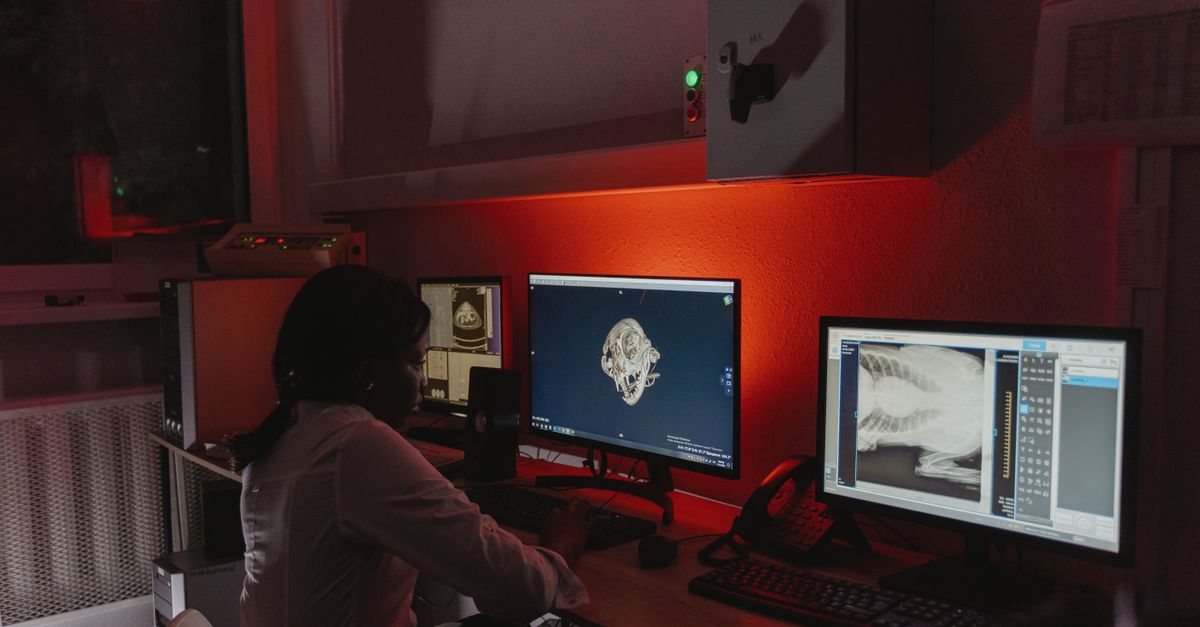

The pace of materials discovery has changed profoundly over the past decade, as processes that once demanded decades of laborious trial-and-error can now unfold within years or even months. This rapid shift stems from the combination of artificial intelligence and high-throughput laboratories, a synergy that redefines how researchers investigate, evaluate, and confirm emerging materials. The transformation is not subtle; it is fundamental, reshaping the full discovery pathway from initial hypothesis to final deployment.
Long-Standing Obstacles in Materials Discovery
Historically, materials research followed a slow, linear path. Scientists proposed a theory, synthesized a small number of samples, tested them one by one, and refined the approach based on results. This model faced several constraints:
- Vast and complex design landscapes that may encompass millions or even billions of potential material pairings.
- Substantial experimental expenses along with lengthy synthesis procedures.
- Restricted capacity to extract insights from failed or inconclusive outcomes.
- Human-driven preferences that influence which materials are chosen for subsequent testing.
Artificial intelligence reshapes how materials are discovered by approaching research as a data‑driven prediction task, where machine learning systems are trained on extensive datasets of established structures, compositions, and experimentally verified properties, and once calibrated, these models can swiftly explore immense chemical landscapes.
Key contributions delivered by AI encompass:
- Property prediction: AI can forecast attributes like mechanical durability, conductivity, stability, or heat tolerance even before a material is produced.
- Inverse design: Rather than determining the traits of an existing material, researchers specify desired performance targets, and AI suggests suitable options.
- Pattern recognition: Models reveal connections that humans often miss, including fine atomic configurations that influence behavior.
- Continuous learning: As fresh experimental results appear, the models adapt and steadily reduce their margin of error.
For instance, AI-driven evaluations have uncovered novel solid electrolyte compounds for next-generation batteries that provide greater ionic conductivity and deliver improved safety compared with traditional materials.
The Function of High-Throughput Laboratories
High-throughput labs act as the practical extension of AI-driven forecasts, relying on automation, robotics, and large-scale parallel testing to create and evaluate hundreds or even thousands of material samples at once.
Their impact includes:
- Fast generation of compositional gradients instead of isolated individual samples.
- Automated assessment of attributes like hardness, optical behavior, and catalytic performance.
- Standardized procedures that minimize human-driven variability and mistakes.
- Reduced experimental costs, allowing wider investigative scope.
A single high-throughput experiment may deliver in just one week a volume of data that a conventional laboratory would gather only after several years, supplying AI models with abundant and highly refined information.
The Closed-Loop Insight Engine
The true acceleration occurs when AI and high-throughput labs are integrated into a closed-loop system. In this model:
- AI proposes a set of promising materials.
- The high-throughput lab synthesizes and tests them in parallel.
- Results are automatically analyzed and returned to the model.
- The AI updates its predictions and proposes the next batch.
This cyclical process can operate nonstop, allowing autonomous exploration with only limited human input, and case studies in catalyst development demonstrate that these systems have been able to pinpoint high‑performance materials up to ten times more rapidly than traditional research methods.
Broadening Opportunities for Exploration via Robust Data Infrastructure
Open materials databases and standardized data formats amplify the impact of AI and automation. Large public datasets containing millions of computed and experimental material records allow researchers worldwide to build and validate models without starting from scratch.
This shared infrastructure:
- Reduces duplication of effort.
- Improves reproducibility and benchmarking.
- Enables smaller labs and startups to compete with large institutions.
As data volume and quality increase, AI predictions become more reliable, creating a positive feedback loop for innovation.
Tangible Effects Felt Throughout Multiple Industries
The acceleration of materials discovery is already influencing multiple sectors:
- Energy: Faster development of battery electrodes, fuel cell membranes, and photovoltaic materials.
- Manufacturing: Stronger, lighter alloys and composites optimized for performance and cost.
- Chemicals: More selective and durable catalysts that reduce energy use and emissions.
- Electronics: Novel semiconductors and insulating materials supporting smaller and faster devices.
These advances reduce the gap from scientific discovery to market-ready solutions, turning accelerated research into broader economic and social benefits.
The accelerating pace of materials discovery is not simply the result of faster computers or better machines. It reflects a deeper shift toward systems that learn, adapt, and explore with minimal friction. By uniting predictive intelligence with experimental scale, researchers are no longer confined to narrow paths of exploration. Instead, they navigate vast design spaces with purpose and speed, uncovering materials that were previously invisible. This transformation suggests a future where discovery is limited less by human bandwidth and more by imagination and intent.