

1. The Large Hadron Collider (LHC)
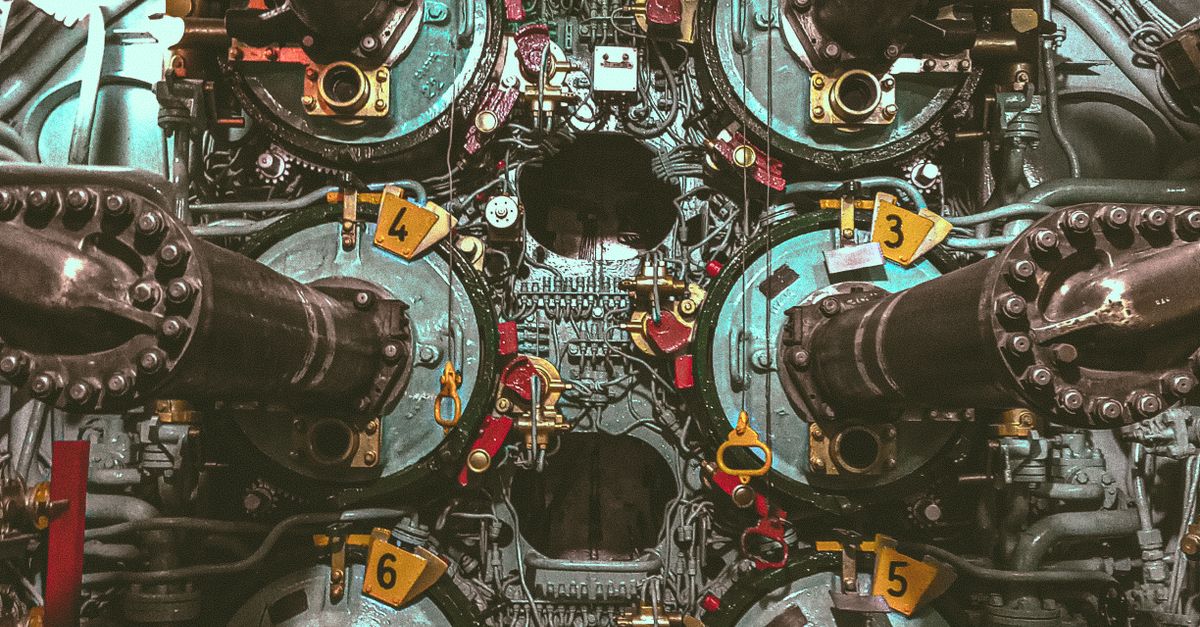
The Large Hadron Collider at CERN near Geneva is the world’s most powerful particle accelerator. Spanning 27 kilometers beneath the French-Swiss border, it accelerates protons to near the speed of light and collides them to recreate conditions that existed fractions of a second after the Big Bang. In 2012, experiments at the LHC confirmed the existence of the Higgs boson, a fundamental particle that explains why other particles have mass. The project involves more than 10,000 scientists and engineers from over 100 countries, making it one of the largest scientific collaborations ever assembled. Beyond particle physics, technologies developed for the LHC have advanced superconducting magnets, data processing, and medical imaging.
2. The International Space Station (ISS)
Orbiting approximately 400 kilometers above Earth, the International Space Station is a joint project involving NASA, Roscosmos, ESA, JAXA, and CSA. Continuously inhabited since 2000, it serves as a microgravity laboratory for research in biology, physics, astronomy, and human physiology. More than 3,000 scientific investigations have been conducted aboard the ISS. The station has deepened understanding of long-duration spaceflight, informing plans for missions to the Moon and Mars. Its construction required over 40 assembly missions and remains a symbol of geopolitical cooperation in space.
3. The Human Genome Project
Completed in 2003 after 13 years of work, the Human Genome Project successfully mapped the entire human genetic sequence—approximately 3 billion base pairs. Coordinated across research centers in the United States, the United Kingdom, Japan, France, Germany, and China, it transformed biomedical science. The cost, initially estimated at 3 billion dollars, dropped significantly as sequencing technologies improved. The project paved the way for personalized medicine, gene therapies, and rapid diagnostic tools, including those used in cancer genomics and rare disease detection.
4. The James Webb Space Telescope (JWST)
Launched in 2021, the James Webb Space Telescope stands as the most potent space observatory ever constructed. Situated nearly 1.5 million kilometers from Earth at the second Lagrange point, this facility studies infrared wavelengths to examine the ancient universe. Equipped with a 6.5-meter segmented mirror alongside a sunshield matching a tennis court in size, JWST spots galaxies generated over 13 billion years ago. Early discoveries feature comprehensive breakdowns of exoplanet atmospheres coupled with remarkable pictures of star-forming zones, transforming both cosmology and planetary science.
5. The International Thermonuclear Experimental Reactor (ITER)
Being built in southern France, ITER seeks to prove that nuclear fusion can serve as a massive, carbon-neutral power supply. Supported by 35 nations—such as the European Union member states, the United States, China, India, Japan, Russia, and South Korea—this initiative strives to generate ten times the energy utilized during its fusion processes. By employing robust magnetic fields to trap extremely hot plasma reaching over 150 million degrees Celsius, ITER stands as a vital milestone on the path toward commercial fusion facilities capable of revolutionizing worldwide energy networks.
6. The Square Kilometre Array (SKA)
The Square Kilometre Array is an international effort to build the world’s largest radio telescope across sites in Australia and South Africa. When completed, it will consist of thousands of antennas with a total collecting area of one square kilometer. The SKA will probe cosmic phenomena such as dark energy, gravitational waves, and the formation of the first stars and galaxies. Its data output is expected to exceed current global internet traffic, driving innovation in high-performance computing and big data management.
7. The Event Horizon Telescope (EHT)
The Event Horizon Telescope connects radio observatories worldwide, creating a virtual instrument the size of Earth through a method known as very-long-baseline interferometry. The first photograph of a black hole, situated within the galaxy Messier 87, was unveiled by the project in 2019. Subsequently, in 2022, the collaboration published the initial visual of the black hole residing at the core of the Milky Way. Encompassing over 300 researchers, this partnership highlights how dispersed infrastructure empowers astronomical observation to reach unparalleled resolution.
8. The Deep Underground Neutrino Experiment (DUNE)
The Deep Underground Neutrino Experiment, hosted in the United States with global participation, aims to study neutrinos—elusive particles that may explain why matter dominates over antimatter in the universe. A high-intensity neutrino beam will travel 1,300 kilometers from Fermilab in Illinois to detectors deep underground in South Dakota. By observing neutrino oscillations, scientists hope to answer fundamental questions about the origins and structure of the cosmos.
9. The Human Brain Project
The Human Brain Project, funded by the European Union, seeks to simulate and understand the human brain using supercomputing and interdisciplinary neuroscience. Integrating data from molecular biology to cognitive science, it aims to build detailed digital models of neural circuits. Although ambitious and controversial, the initiative has advanced neuromorphic computing and provided shared research platforms that support thousands of neuroscientists worldwide.
10. The Global Ocean Observing System (GOOS)
The Global Ocean Observing System coordinates thousands of instruments, including satellites, buoys, and autonomous underwater vehicles, to track ocean temperature, salinity, currents, and biogeochemistry. Because oceans absorb more than 90 percent of the excess heat generated by global warming, GOOS delivers vital climate information. Initiatives like the Argo float network launch over 3,000 drifting sensors across the globe, producing real-time information essential for weather forecasting, disaster preparedness, and marine conservation.
11. The Large Synoptic Survey Telescope (Vera C. Rubin Observatory)
Located in Chile, the Vera C. Rubin Observatory contains an 8.4-meter telescope engineered to execute a decade-long study of the ever-changing sky. Every few nights, the entire visible cosmos is captured by this facility, producing dozens of terabytes of information on a nightly basis. Billions of galaxies are mapped, near-Earth objects are monitored, and both dark matter and dark energy are explored through its Legacy Survey of Space and Time. Progress in artificial intelligence and cloud-driven astronomy will be accelerated by the immense scale of its information analytics.
12. The Global Virome Project
The Global Virome Project represents an international effort designed to uncover and describe most viruses possessing zoonotic capabilities—specifically those able to jump from animals to people. Through cataloging hundreds of thousands of undiscovered viral agents, researchers aim to forecast and stop upcoming pandemics. Field biology, genomics, epidemiology, and data science are combined within this initiative, mirroring critical lessons gained from epidemics like SARS, Ebola, and COVID-19.
The Broader Impact of Global Scientific Ambition
These twelve projects demonstrate how modern science transcends borders, disciplines, and generations. They require vast funding, advanced engineering, and coordinated governance, yet their benefits ripple far beyond laboratories. Breakthroughs in particle physics inform medical imaging; space telescopes inspire new materials and computing systems; genomic research transforms healthcare; and climate monitoring safeguards vulnerable communities.
Ambitious international collaborations reveal a defining characteristic of contemporary science: the most profound questions about matter, life, energy, and the universe cannot be answered in isolation. They demand shared infrastructure, open data, and collective intellectual effort. As global challenges grow more complex, the cooperative models forged by these projects offer not only scientific discovery but also a blueprint for how humanity can pursue knowledge together.